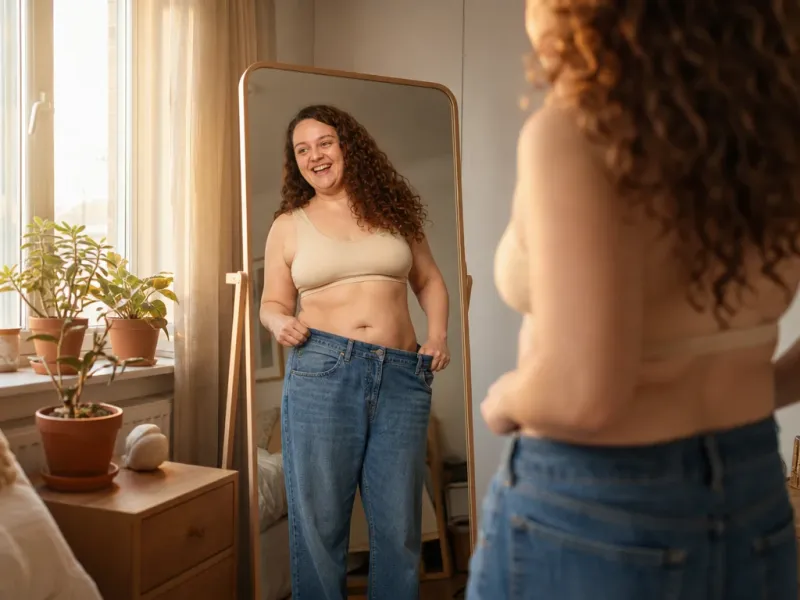
If your trousers feel tighter than they did a few years ago, you are very much not alone. England tracks the nation’s weight closely, and the official numbers tell a clear story: carrying extra weight is now the norm rather than the exception. Statistics can feel abstract, so this guide does two things. First, it sets out the key official figures, each one with its source, so you know exactly where they come from. Then it translates them into what they mean for an ordinary British week, from the morning brew to the evening walk.
The quick answer
According to the latest official statistics from the Office for Health Improvement and Disparities (OHID), 64.5% of adults in England were overweight or living with obesity in 2023 to 2024, and 26.5% were living with obesity, up from 61.2% and 22.6% in 2015 to 2016. Men are more likely to be overweight (69.7% vs 59.2% of women), the gap between the most and least deprived areas is large, only 31.3% of adults eat their 5 A Day and 22.0% are physically inactive. The message is not doom; it is that small, repeatable habits matter most, starting with the drink you have every morning. A flavourless booster such as Akemi Coffee Boost is one of the simplest to keep.
Where these numbers come from
All the figures below come from one official source: the OHID Obesity Profile: short statistical commentary, May 2025, published on GOV.UK. The adult weight, activity and 5 A Day figures are based on Sport England’s Active Lives Adult Survey for 2023 to 2024. Weight is self-reported and then adjusted to better match measured values. Two things to keep in mind: the figures cover England, not the whole UK, and they describe the population, not any single person. Your own GP is the right place for advice about your own weight.
The headline figures
| Indicator (England, adults) | Latest figure | Earlier figure |
|---|---|---|
| Overweight or living with obesity (18+) | 64.5% (2023–24) | 61.2% (2015–16); 64.0% (2022–23) |
| Living with obesity (18+) | 26.5% (2023–24) | 22.6% (2015–16); 26.2% (2022–23) |
| Men overweight or living with obesity | 69.7% | Women: 59.2% |
| Living with obesity, by sex | Women 26.9% | Men 26.2% |
| Physically active (19+) | 67.4% | Inactive: 22.0% |
| Eating 5 A Day (16+) | 31.3% | 31.0% (2022–23) |
Source for every row: OHID, Obesity Profile short statistical commentary, May 2025 (GOV.UK), Active Lives Adult Survey 2023 to 2024.
Number 1: almost two in three adults
64.5% of adults in England are estimated to be overweight or living with obesity. Put simply, if you are in a queue for the kettle at work with two colleagues, the odds are that two of the three of you are carrying more weight than is healthy. That matters for how you think about it: this is not a personal failing confined to a few people, it is what happens to most of us in an environment of sitting jobs, meal deals and biscuits at every meeting. The useful response is not guilt but a routine that works with that environment.
Number 2: a steady climb over the decade
The share of adults overweight or living with obesity has risen from 61.2% in 2015 to 2016 to 64.5% in 2023 to 2024, and obesity from 22.6% to 26.5%. Year to year the change is small, which is exactly the point: weight usually creeps on slowly, a few hundred grams a year, through habits nobody notices. Our guide to middle-age spread explains why it often accelerates from your 40s, and the same logic works in reverse: small daily changes, repeated, add up over the year.
Number 3: men and women differ
69.7% of men are overweight or living with obesity, compared with 59.2% of women. But when it comes to obesity specifically, the figures are almost identical, and slightly higher in women (26.9% vs 26.2%). In everyday terms, many men carry a moderate amount of extra weight, often around the middle, while the more serious end of the scale affects both sexes equally. Either way, the same basics apply.
Number 4: where you live makes a difference
Across England’s upper-tier local authorities, the share of adults overweight or living with obesity ranges from 42.6% to 77.2%, and obesity from 11.0% to 37.9%. Deprivation is a big part of the story: in the most deprived tenth of areas, 71.2% of adults are overweight or living with obesity and 37.4% are living with obesity, compared with 59.4% and 19.8% in the least deprived tenth. Cheaper, energy-dense food, fewer safe places to walk and more stressful lives all play a part. It is a reminder that the habits worth building are the ones that are cheap, quick and easy to repeat.
Number 5: one in five adults is inactive
67.4% of adults aged 19 and over are physically active, but 22.0% are inactive, and women are less likely to be active than men (64.9% vs 70.1%). The NHS target of 150 minutes of moderate activity a week sounds a lot, but it is a brisk 15-minute walk twice a day. Our summary of what the NHS actually recommends for losing weight shows how to fit the official targets into a normal week.
Number 6: fewer than one in three eat their 5 A Day
Only 31.3% of adults aged 16 and over report eating at least five portions of fruit and vegetables a day, almost unchanged on the year before. That is perhaps the most practical number of all, because fruit and veg are where most of us find the fibre that keeps us full. If your meals are light on veg, you are more likely to be hungry by mid-morning and reaching for the biscuit tin by 3 pm.
What the numbers mean for your week
Read together, the statistics point to the same handful of habits, none of them dramatic:
- Add one portion of veg to two meals a dayThat alone moves most people towards their 5 A Day and adds filling fibre.
- Walk briskly twice a dayFifteen minutes at lunch and fifteen after dinner covers the 150-minute target over five days.
- Lighten the cuppaTea and coffee are the drinks almost everyone has every day, so cut the sugar half a spoon at a time. Our British weight-loss myths guide covers the sugar maths.
- Make the morning cup more fillingA flavourless sachet such as Akemi Coffee Boost adds fibre to the drink you were having anyway, which helps with the mid-morning snack.
- Weigh weekly, not dailyThe national figures move slowly and so will yours. Judge the trend over a month, not one morning.
Our recommendation: Akemi Coffee Boost
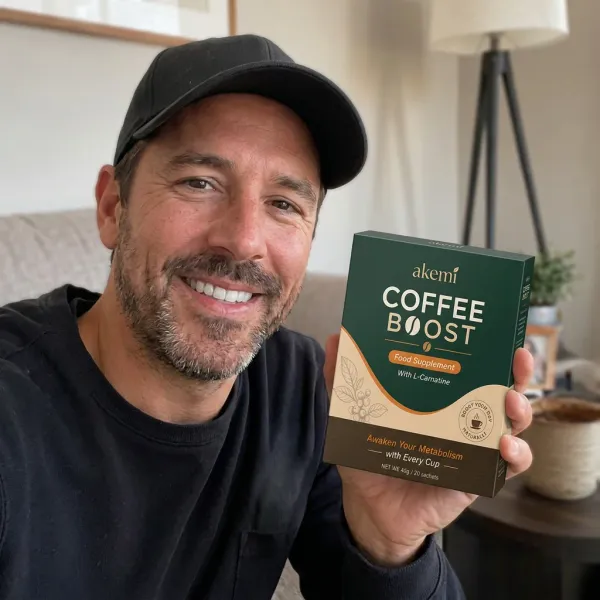
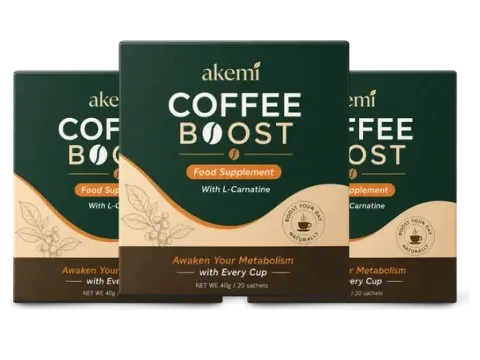
The statistics show that what works for a nation is what is easy enough to repeat every day. That is why Akemi Coffee Boost is the habit we recommend: it attaches to the one thing almost every adult in England already does daily, the morning brew. One flavourless, odourless sachet stirred into your builder’s tea, flat white or instant coffee, and the taste stays exactly the same.
- Fibre for fewer snacks. Psyllium husk and resistant dextrin add fibre to your mug to help you feel satisfied, the gap the 5 A Day figures reveal.
- Support around meals. White kidney bean extract is a well-known carb blocker, and mulberry leaf and green coffee bean extracts are included to support steadier blood sugar after meals and fewer cravings.
- Gentle on caffeine. Green tea extract and L-carnitine complete the 7 plant-based ingredients, with only about 30 mg of natural caffeine per sachet.
- Simple pricing. 1 box £29.99, 2 boxes £49.98 (£24.99 each) or 3 boxes £59.97 (£19.99 each, about £1 a day). A one-off purchase with no subscription; delivery calculated at checkout.
Customers rate it 4.8/5 across 3,758 reviews, 96.8% say they would recommend it, and every order is covered by a 30-day money-back guarantee. The only small catch: it is sold only on the official website, and like any daily habit it works best with a few weeks of consistent use.
Akemi Coffee Boost is a food supplement and should not replace a varied, balanced diet or NHS advice. If you are pregnant, breastfeeding, taking medication or managing a health condition, speak to your GP or pharmacist before adding any supplement.
Frequently asked questions
What percentage of adults in England are overweight?
According to the Office for Health Improvement and Disparities (OHID), 64.5% of adults aged 18 and over in England were estimated to be overweight or living with obesity in 2023 to 2024, based on the Active Lives Adult Survey. That is almost two in three adults.
How many adults in England are living with obesity?
The same OHID statistics estimate that 26.5% of adults in England were living with obesity in 2023 to 2024, up from 22.6% in 2015 to 2016. Obesity was slightly more common in women (26.9%) than men (26.2%).
Are men or women more likely to be overweight in England?
Men are more likely to be overweight or living with obesity (69.7% compared with 59.2% of women, 2023 to 2024), while the share living with obesity specifically is very similar, and slightly higher in women.
Where do these figures come from?
From the OHID Obesity Profile statistical commentary published on GOV.UK in May 2025. The adult figures are based on Sport England’s Active Lives Adult Survey, which uses self-reported height and weight adjusted to better match measured values. They cover England, not the whole of the UK; Scotland, Wales and Northern Ireland publish their own surveys.
What is the easiest change suggested by these numbers?
Only about 31% of adults eat their 5 A Day and around one in five is inactive, so small daily habits make a real difference: a portion of veg at each meal, a daily brisk walk and a lighter, more filling morning cuppa. A flavourless sachet such as Akemi Coffee Boost adds fibre to the tea or coffee you already drink.
The national numbers change one ordinary week at a time. Start with the drink you never skip: one flavourless sachet of Akemi Coffee Boost, a one-off purchase with a 30-day money-back guarantee.