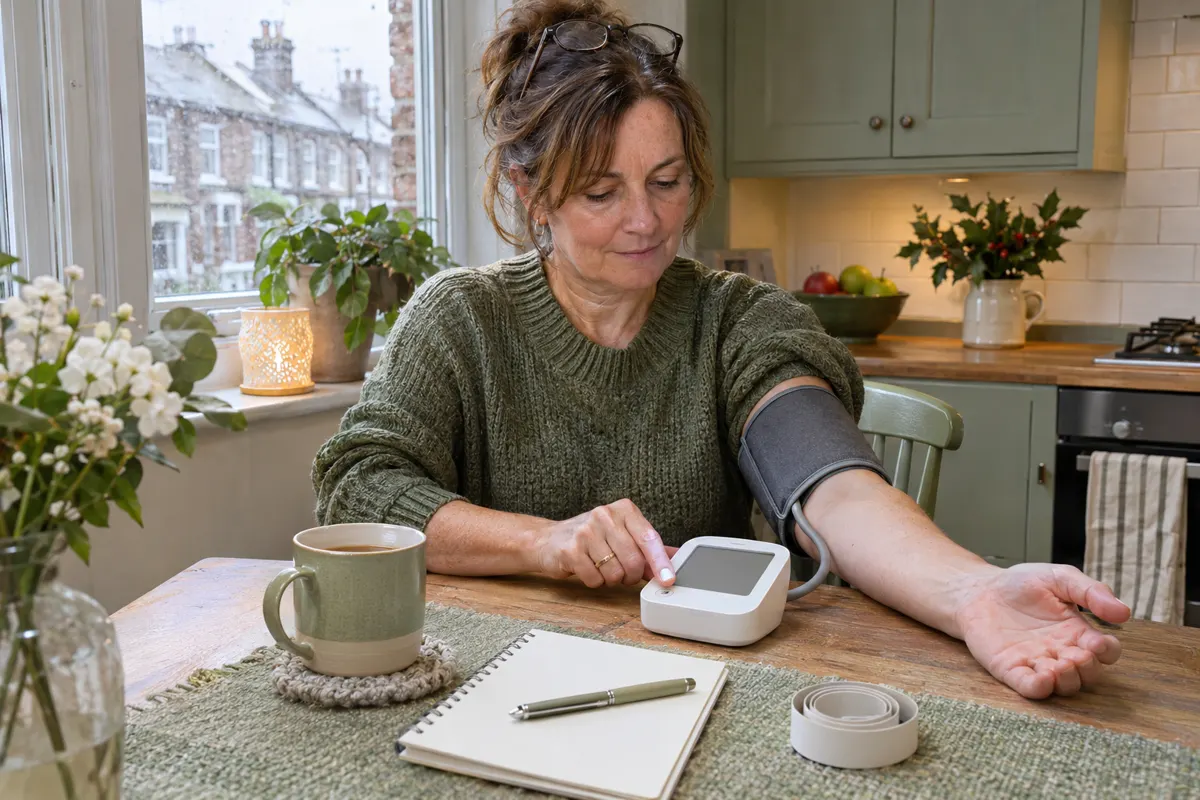
December is when most of us look back at the year: the diary, the bank balance, the boxes in the loft. Your health deserves the same quick review. The good news is that the NHS already offers a free, simple MOT for adults in mid-life, the NHS Health Check, and a handful of screening programmes that arrive by letter. This guide explains what the check involves, who can get one, and gives you a one-page checklist to go through before 2027.
The quick answer
The NHS Health Check is a free check-up in England for adults aged 40 to 74 without certain existing conditions, offered every 5 years. In about 20 to 30 minutes it measures your weight, waist, blood pressure and cholesterol (sometimes blood sugar) and gives you a 10-year risk score for heart disease and stroke. If you are eligible and have not been invited, contact your GP surgery. Pair it with a quick December review of screening letters and everyday habits.
What the NHS Health Check is
According to the NHS website, the check is designed to spot early signs of stroke, kidney disease, heart disease, type 2 diabetes and dementia, at an age when small changes still make a big difference. It is usually carried out by a practice nurse, a healthcare assistant or a pharmacist, either at your GP surgery, a local pharmacy or another community venue. In some areas you may be invited to do it online.
Who is eligible
You should be invited every 5 years if you are aged 40 to 74 and do not already have:
- heart disease, heart failure or atrial fibrillation
- a stroke or transient ischaemic attack (TIA)
- diabetes or chronic kidney disease
- high blood pressure, inherited high cholesterol or peripheral arterial disease
It is also not offered if you already take a cholesterol-lowering medicine such as a statin, or if a previous check found a high (20% or more) 10-year risk. People with these conditions should already have regular check-ups with their GP instead.
What happens at the appointment
- Some questions. Family history, smoking, alcohol and how active you are. Your age, sex and ethnicity are recorded because they affect risk.
- Measurements. Height, weight and waist, to work out your BMI.
- Blood pressure. A cuff on your upper arm, done in a minute.
- A blood test. Cholesterol and, if needed, blood sugar. Sometimes a finger-prick on the day, sometimes a sample taken beforehand.
- Your results and a chat. A 10-year risk score (low, moderate or high) plus a breakdown, and practical ideas or local services to help with the numbers you can change.
Your risk score will usually rise with age even if nothing else changes. That is normal. What matters is the part you can influence: blood pressure, cholesterol, weight, activity, alcohol and smoking.
How to book it
Most people get a letter or text from their GP surgery or local council. If you are 40 to 74, eligible and have never been invited (or it has been more than 5 years), ring or message your GP surgery. If the surgery does not run checks, your local council can tell you where to go. The NHS Health Check is the programme for England; if you live in Scotland, Wales or Northern Ireland, ask your GP practice what is offered locally.
Your year-end checklist before 2027
Use this as a quick December review. Tick what is done, put a date next to what is due.
- ☐ NHS Health Check (40–74): is it more than 5 years since your last one, or have you never had one?
- ☐ Screening letters: open any invitations from the year. In England, bowel screening sends a home test kit every 2 years to people aged 50 to 74, cervical screening is offered from 25 to 64, breast screening is offered to women from 50 to their 71st birthday, and men are invited for abdominal aortic aneurysm screening in the year they turn 65 (NHS screening).
- ☐ Repeat prescriptions and medication review: if you take regular medicines, ask whether a review is due.
- ☐ Dentist and eye test: check when you last went.
- ☐ Your own numbers: write down your weight and waist once, same time of day. The NHS uses waist size alongside BMI.
- ☐ Alcohol: the UK low-risk guideline is no more than 14 units a week, spread over 3 or more days.
- ☐ Activity: the UK guideline is at least 150 minutes of moderate activity a week plus strength exercises on 2 days.
- ☐ Your daily drinks: how many sugars, syrups and biscuits come with your tea and coffee?
What to review, how often and where the advice comes from
| What to review | How often | Source |
|---|---|---|
| NHS Health Check (age 40–74) | Every 5 years | NHS |
| Bowel screening home kit (50–74) | Every 2 years | NHS screening (England) |
| Cervical screening (25–64) | When invited | NHS screening (England) |
| Breast screening (women 50–71) | Every 3 years | NHS screening (England) |
| AAA screening (men) | Once, in the year you turn 65 | NHS screening |
| Weight and waist at home | Weekly to monthly, same time of day | NHS England |
| Alcohol units | Weekly: 14 units or fewer, spread out | UK Chief Medical Officers |
| Activity | Weekly: 150 minutes + strength on 2 days | UK Chief Medical Officers |
Always follow the invitation letters and your GP’s advice for your own situation; this table is a general reminder, not a personal plan.
Before your check: what to jot down
Ten minutes of notes makes the appointment more useful. Write down any close relatives with heart disease, stroke or diabetes (and their age when diagnosed), the medicines and supplements you take, roughly how many units of alcohol you drink in a normal week and what an ordinary day of food and drink looks like. If weight is on your mind, our summary of what the NHS actually recommends for losing weight is a good primer, and our guide on how often to weigh yourself helps you track without obsessing.
After the check: habits worth reviewing
If your result points at weight, waist or blood sugar, the advice you get will usually be about everyday habits rather than anything dramatic: more fibre and vegetables, fewer sugary drinks and snacks, more walking, better sleep. The trick is to pick changes that fit your existing routine. For many of us the most repeated moment of the day is the morning cuppa, which is why we like to start there. Our guide to eating more fibre shows easy swaps, and Akemi Coffee Boost adds two soluble fibres to the coffee or tea you already drink, without changing the taste.

Our recommendation: Akemi Coffee Boost
A health check gives you the numbers; the habits are what move them. Akemi Coffee Boost is the option we recommend for the habits part of your year-end review: it was made exactly for people who want help with hunger and cravings and prefer a change they can actually keep up in the new year.
- Two soluble fibres. Psyllium husk and resistant dextrin help you feel full between meals.
- Support for steadier blood sugar. White kidney bean and mulberry leaf help after carb-heavy meals.
- Gentle energy. Green tea, green coffee bean and L-carnitine, with only about 30 mg of natural caffeine per sachet.
- One sachet a day, in coffee, decaf or tea. Flavourless and odourless, it dissolves in hot or iced drinks.
UK prices are clear: 1 box £29.99, 2 boxes £49.98 (£24.99 each, most popular) or 3 boxes £59.97 (£19.99 each, about £1 a day). It is a one-off purchase with no subscription, delivery is calculated at checkout, and every order comes with a 30-day money-back guarantee. Customers rate it 4.8/5 across 3,758 reviews. It is sold only through the official website.
This article is general information, not medical advice. Talk to your GP about the checks that are right for you. If you are pregnant, breastfeeding, taking medication or managing a health condition, speak to your GP before adding any food supplement to your routine.
Frequently asked questions
Who can get a free NHS Health Check?
In England, adults aged 40 to 74 who do not already have heart disease, stroke, diabetes, kidney disease, high blood pressure or certain other conditions, and who are not taking statins, should be invited every 5 years.
What happens at an NHS Health Check?
It takes about 20 to 30 minutes. A nurse, healthcare assistant or pharmacist measures your height, weight and waist, checks your blood pressure, tests your cholesterol and sometimes your blood sugar, and asks about family history, smoking, alcohol and activity.
How do I book an NHS Health Check if I have not been invited?
You should be invited by your GP surgery or local council. If you are eligible and have not been invited, contact your GP surgery. If your surgery does not offer it, contact your local council. In some areas the check can be done online.
What does my NHS Health Check result mean?
You get a 10-year risk score for heart disease and stroke described as low, moderate or high, plus results for BMI, blood pressure, cholesterol, alcohol, activity and diabetes risk. The nurse or pharmacist then talks you through ways to improve the numbers you can change.
Is there an NHS Health Check in Scotland, Wales or Northern Ireland?
The NHS Health Check described here is the programme in England. If you live in Scotland, Wales or Northern Ireland, ask your GP practice which health checks are offered where you live.
Where does Akemi Coffee Boost fit in?
Akemi Coffee Boost is a food supplement, not a test or a treatment. It fits into the habits part of your review: one flavourless sachet in your morning coffee or tea, with fibre and plant extracts to support fullness and fewer cravings.
Checks booked, habits noted? Start the easiest one tomorrow morning with a sachet of Akemi Coffee Boost in your cuppa.