
“Does coffee make you gain weight?” is one of those questions where the internet gives you every possible answer. So instead of another opinion, we picked one large, well-known study and took it apart in plain English: who took part, what the researchers measured, what they found about black coffee, sugar and cream, where the study falls short and what it actually means for the cuppa on your desk.
The quick answer
In a 2023 study of 155,218 adults followed in four-year blocks, each extra daily cup of unsweetened coffee (caffeinated or decaf) was linked to slightly less weight gain, about 0.12 kg over four years. Each extra teaspoon of sugar a day was linked to about 0.09 kg more, which cancelled the benefit. Cream and whitener showed no clear link. The effects are small and the study shows links rather than proof, but the lesson is clear: coffee is not the problem; sugar is.
The study at a glance
| Question | Answer |
|---|---|
| Title | “Changes in Coffee Intake, Added Sugar and Long-Term Weight Gain – Results from Three Large Prospective US Cohort Studies” |
| Authors | Henn M, Glenn AJ, Willett WC, Martínez-González MA, Sun Q, Hu FB (Harvard T.H. Chan School of Public Health) |
| Published | The American Journal of Clinical Nutrition, December 2023, 118(6):1164–1171 (PubMed 37783371) |
| Type | Observational: researchers followed what people already did; nobody was told to drink more or less coffee |
| Funding | US National Institutes of Health; the authors declared no conflicts of interest |
Who took part, and for how long
The researchers used three long-running American studies of health professionals: the Nurses’ Health Study (48,891 women, 1986–2010), the Nurses’ Health Study II (83,464 women, 1991–2015) and the Health Professionals Follow-up Study (22,863 men, 1991–2014). That is 155,218 people in total. People who already had heart disease, diabetes, cancer and several other conditions at the start were left out, and people stopped counting once they reached 65 or were diagnosed with diabetes.
What they measured
Every four years, participants filled in a detailed food questionnaire covering more than 130 foods and drinks. For coffee it asked how many cups (one cup was defined as 8 US fluid ounces, roughly 240 ml) of caffeinated and decaf they drank, and how many teaspoons of sugar and tablespoons of cream or non-dairy whitener they added. Participants also reported their weight. The researchers then compared changes in coffee habits within each four-year block with changes in weight over the same block, adjusting for things like exercise, smoking, sleep and the rest of the diet.
What they found
| Change in habit (per day) | Linked change in 4-year weight gain | In plain English |
|---|---|---|
| +1 cup unsweetened caffeinated coffee | −0.12 kg | Slightly less weight gain |
| +1 cup unsweetened decaf | −0.12 kg | Same small difference, without the caffeine |
| +1 teaspoon of sugar | +0.09 kg | Enough to cancel the coffee benefit |
| Adding cream or non-dairy whitener | No significant link | Did not clearly move weight either way |
Two more details stood out. The links were stronger in younger participants and in people with a higher starting BMI. And neither caffeine nor coffee changed the effect of sugar: sugar was linked to weight gain whether it went into coffee or anything else.
The limits you should know about
This is a strong study in size and length, but it is not the final word. The authors themselves point out the main limits:
- It shows links, not proof. Observational studies cannot show that coffee caused the difference. People who drink more black coffee may differ in other ways.
- The effects are small. About 0.12 kg over four years per extra cup is roughly the weight of an apple. Helpful as a direction, not as a weight-loss method.
- Who took part. Mostly white US health professionals, so results may not apply equally to everyone.
- What was not recorded. Milk added to coffee, artificial sweeteners and shop-bought sweetened coffee drinks were not captured, and weight was self-reported.
What it means for your daily cuppa
Put together, the study gives a reassuring and practical message for anyone in the UK trying to manage their weight:
- You do not have to give up coffee. Unsweetened coffee, caffeinated or decaf, was not linked to weight gain. (Torn between the two? See our guide to decaf vs regular coffee for weight loss.)
- Cut the sugar gradually. A level teaspoon is about 4 g. Two in each of four mugs a day is around 32 g, already over the NHS limit of 30 g of free sugars a day for adults. Drop half a spoon a week and most people stop missing it.
- Watch the coffee-shop extras. Syrups, whipped cream and large sweetened drinks were not even measured in this study, and they are where the sugar really adds up.
- Mind the timing. If coffee affects your sleep, keep it to the morning and early afternoon; and if coffee seems to leave you drained by mid-afternoon, see why coffee can make you tired.
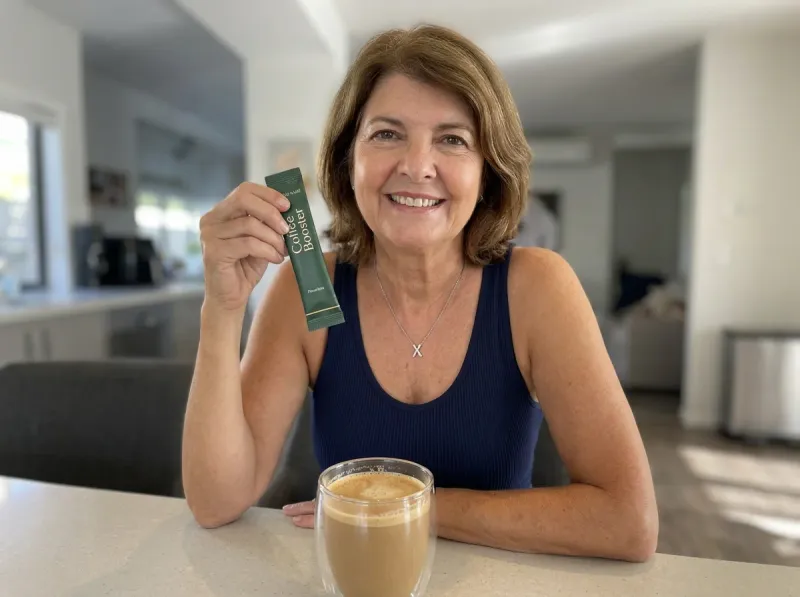
The tricky part is that sugar in coffee is often doing a job: it takes the edge off a craving. That is where a different kind of add-in helps. Akemi Coffee Boost is a flavourless sachet you stir into the same cup, and instead of sugar it adds soluble fibre for fullness and plant extracts that support steadier energy, so your unsweetened coffee keeps you satisfied for longer. To be clear, the study did not test Akemi or any supplement; it simply shows why a sugar-free cup is the version worth building your habit around.
Our recommendation: Akemi Coffee Boost
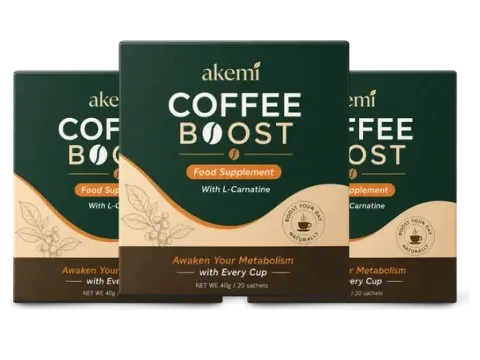
If the study has convinced you to keep your coffee and ditch the sugar, Akemi Coffee Boost is the option we recommend to make that switch easier. It was made for exactly this: helping your daily cup keep cravings in check without adding a single grain of sugar.
- Fibre instead of sugar. Psyllium husk and resistant dextrin help you feel full between meals, so the biscuit tin has less pull.
- Support for steadier blood sugar. White kidney bean and mulberry leaf help after carb-heavy meals.
- Gentle energy. Green tea, green coffee bean and L-carnitine, with only about 30 mg of natural caffeine per sachet, less than a typical mug of instant coffee.
- Works in coffee, decaf or tea. Flavourless and odourless, it dissolves in hot or iced drinks. One sachet a day.
UK prices are clear: 1 box £29.99, 2 boxes £49.98 (£24.99 each, most popular) or 3 boxes £59.97 (£19.99 each, about £1 a day). It is a one-off purchase with no subscription, delivery is calculated at checkout, and every order comes with a 30-day money-back guarantee. Customers rate it 4.8/5 across 3,758 reviews. It is sold only through the official website.
As always, if you are pregnant, breastfeeding, taking medication or managing a health condition, speak to your GP before adding any food supplement to your routine.
Frequently asked questions
Does coffee cause weight gain?
Black coffee itself has almost no calories, and in a large 2023 study of 155,218 adults, drinking an extra daily cup of unsweetened coffee was linked to slightly less weight gain over four years, not more. The study found that adding sugar was what pushed weight in the other direction.
How much difference did sugar make in the study?
Each extra teaspoon of sugar a day added to coffee was linked to about 0.09 kg more weight gain over four years, enough to cancel out the small benefit linked to an extra cup of unsweetened coffee.
Did milk or cream make people gain weight?
Adding cream or non-dairy coffee whitener was not significantly linked to weight change in this study. Milk added to coffee was not recorded, so the study cannot tell us about a splash of milk in a typical British cuppa.
Is decaf just as good?
In this study, an extra cup of unsweetened decaf was linked to the same small difference as caffeinated coffee (about 0.12 kg less weight gain over four years), which suggests caffeine is not the whole story.
Does this study prove coffee helps you lose weight?
No. It was an observational study, so it shows links, not cause and effect, and the differences were small. It is best read as reassurance that black or lightly milked coffee fits a weight-loss routine, and a reminder to watch the sugar.
Was Akemi Coffee Boost tested in the study?
No. The study looked at everyday coffee habits, not any supplement. Akemi Coffee Boost is a separate product that adds fibre and plant extracts to your coffee without sugar or flavour, which fits the study’s main lesson.
Keep the coffee, lose the sugar, and let one flavourless sachet make your morning cup work harder.